



Retail security in Montreal is no longer an expense to cut first. Shoplifting has exploded: in Canada, losses reached $9 billion in 2024, compared to $5 billion in 2018, according to the Retail Council of Canada. In Quebec, the Conseil québécois du commerce de détail estimates the phenomenon at nearly 1% of annual sales, approximately $2 billion, with an average of $50,000 per establishment. And what worries retailers most is not just the bill: it’s the violence that increasingly accompanies these thefts. Here’s how a business protects itself intelligently, without treating every customer as a suspect.
A Scourge Costing Billions
The figures are staggering, but they conceal a more nuanced reality. Shoplifting is not an isolated incident: it’s a continuous hemorrhage that erodes the already thin margins of businesses. In extreme cases, up to 10% of merchandise disappears before it’s even sold.
Two profiles coexist. There’s opportunistic theft, where a customer slips an item into their pocket on impulse. And there’s organized theft, carried out by groups that target resalable products, operate in teams, and return as long as the target remains easy. The latter causes the most damage, and it’s the one accompanied by intimidation, even assault against staff.
The targeted products are not chosen at random: brand-name items, cosmetics, meat, alcohol, tools—anything that resells quickly and conceals easily. Convenience stores, open late and often staffed by a single person in the evening, are among the most exposed, lacking backup when situations escalate.
It’s this last point that changes everything. An employee trained to monitor aisles sometimes finds themselves on the front line facing individuals ready to fight. A business’s security therefore protects not just merchandise: it primarily protects the people who work there. There’s a less measurable but very real effect: in a store where thefts and incidents multiply, staff burn out, fear sets in, and turnover increases. A credible security presence doesn’t just help protect inventory; it helps retain employees.
What a Security Agent Changes in a Store
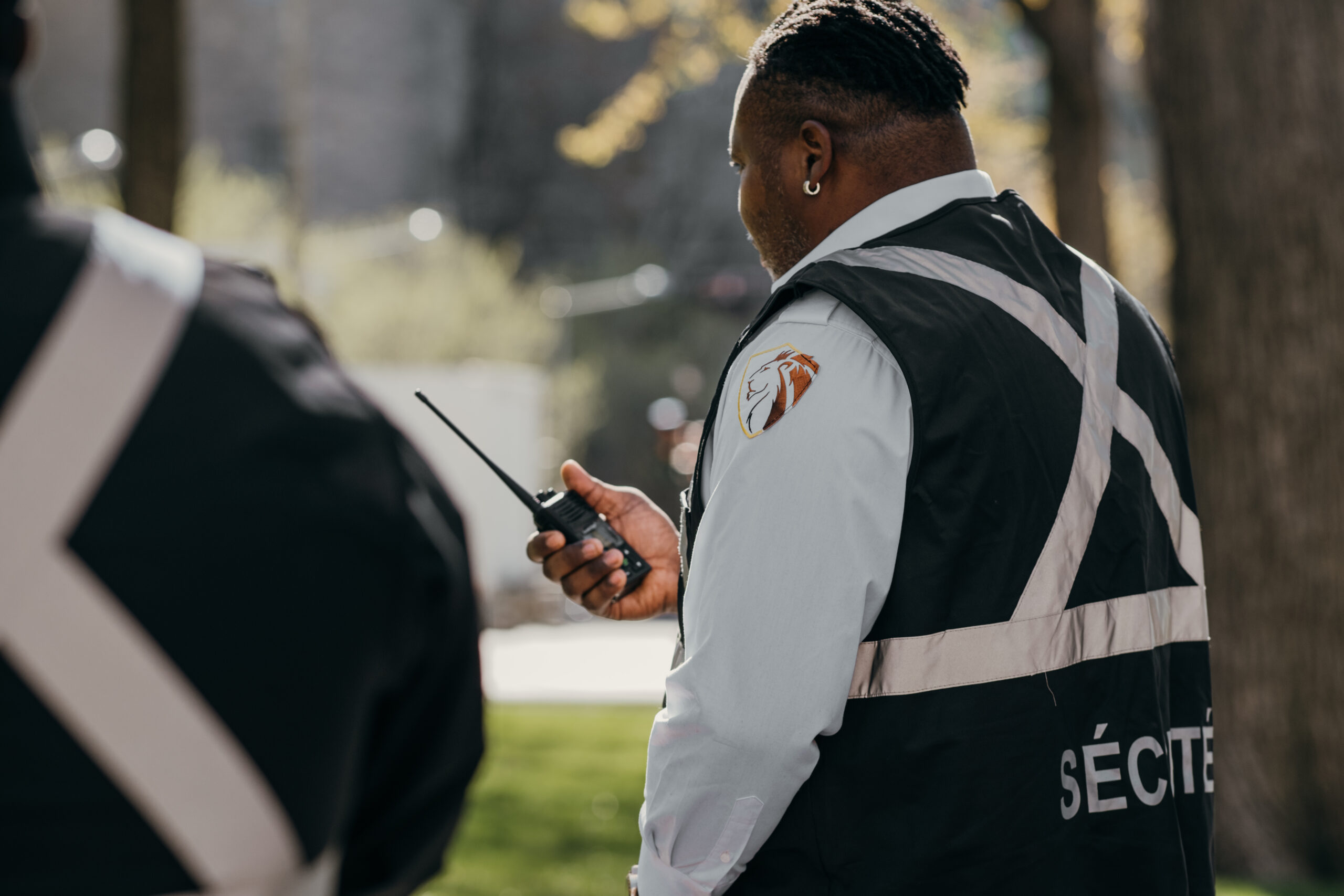
The presence of a uniformed agent alone deters opportunistic theft. A casual thief gives up as soon as they know they’re being watched. But the role of a good agent goes far beyond a deterrent posture.
They read the store. They spot behaviors that don’t fit: the person who avoids staff eye contact, the one who handles an item while watching the cameras, the group that disperses to scatter attention. These are signals that a trained eye catches and that honest customers don’t even notice.
I’ve found that the strongest effect is not apprehension, but prevention. An agent who politely approaches a hesitant customer, offers help, and shows they’re being seen defuses most thefts without any incident. The real skill in retail is securing without dampening the shopping experience for legitimate customers, who are the vast majority.
Loss Prevention: Security Begins Before the Theft
An agent never works alone. They rely on a system that makes theft difficult well before a thief walks through the door. This is called loss prevention, and it operates on multiple levels.
Cameras cover blind spots and provide evidence. Anti-theft tags trigger alarms at exits. Store layout places the most coveted products under surveillance and avoids invisible corners. Finally, staff trained to recognize common theft techniques become a second pair of eyes at every aisle. The table below summarizes these layers and their limitations.
| Measure | What It Does | Its Limitation |
|---|---|---|
| Surveillance Cameras | Deter and provide evidence | Don’t stop theft in real time |
| Anti-Theft Tags | Trigger alarm at exit | Can be bypassed by informed thieves |
| Store Layout | Reduces invisible zones | Constrains commercial layout |
| Staff Training | Detects suspicious behavior | Exposes employee to conflict |
| Loss Prevention Agent | Observes, deters, and intervenes | Represents a recurring cost |
None of these measures is sufficient alone. A camera records a theft, it doesn’t prevent it; a tag sounds, but someone still needs to respond. It’s the combination that truly protects.
Can You Actually Apprehend a Thief?
This is the question that comes up constantly, and the answer deserves nuance. Canadian law provides for citizen’s arrest of a person caught in the act. An agent, like a merchant, can therefore intervene within this specific framework. But the limits are strict, and ignoring them is costly.
An agent cannot search a person or detain them indefinitely. An arrest must be handed over to police without delay. The force used must remain proportionate, or risk prosecution for assault. And apprehending someone wrongly, on mere suspicion, exposes the business to a complaint for wrongful arrest.
This is also why training matters as much as composure. An agent who knows the exact limits of their right to intervene protects the business from a lawsuit as much as from theft. Conversely, a well-intentioned but poorly informed employee can, while trying to do the right thing, expose the company to a lawsuit that will cost more than the recovered merchandise.
Contrary to popular belief, many experienced agents avoid confrontation whenever possible. Observing, documenting, deterring, and when necessary, letting police handle the rest is often safer and more effective than chasing a thief through the aisles. The priority remains the safety of employees and customers, not recovering an item at all costs.
Building a Security Strategy Tailored to Your Business
There is no one-size-fits-all solution. A clothing boutique, a pharmacy, a late-night convenience store, and a big-box retailer have neither the same targeted products, nor the same high-risk hours, nor the same budget. The first step is always the same: identify what gets stolen, when, and through where.
From this assessment, you assemble the right layers. A small business might rely on smart layout, cameras, and an agent during peak hours. A more exposed chain will combine tagging, permanent presence, and coordination with local police. Entrusting this assessment to a security company in Montreal helps avoid two classic mistakes: overspending on unnecessary measures, or underspending where the risk is real.
My rule, after seeing businesses of all sizes: security that works is invisible to honest customers and burdensome to thieves. When a store needs a human presence, a security agent trained for retail does more than monitor: they reassure staff, smooth out tense end-of-day situations, and know exactly where their right to intervene stops.
Frequently Asked Questions About Retail Security
Can a Security Agent Stop a Thief?
Yes, within the framework of citizen’s arrest provided by law, when a person is caught in the act. But the agent cannot search them, must hand the matter over to police without delay, and can only use proportionate force. Apprehending on mere suspicion exposes the business to prosecution.
Is a Visible or Discreet Agent Better?
Both have their place. A uniformed agent deters opportunistic theft by their mere presence. A plainclothes agent better spots organized theft, which is wary of uniforms. Many exposed businesses combine both depending on hours and customer type.
Does Staff Training Replace an Agent?
It complements, it doesn’t replace. Trained staff better detect suspicious behavior, but they cannot be expected to handle a conflict with an aggressive thief. That’s precisely where an agent, trained to intervene safely, takes over.
How Much Does Security Cost for a Business?
It depends on size, high-risk hours, and chosen measures. A small boutique can make do with cameras and an agent during peak hours; an exposed big-box store will invest more. The right benchmark is the ratio between protection cost and losses actually prevented.

